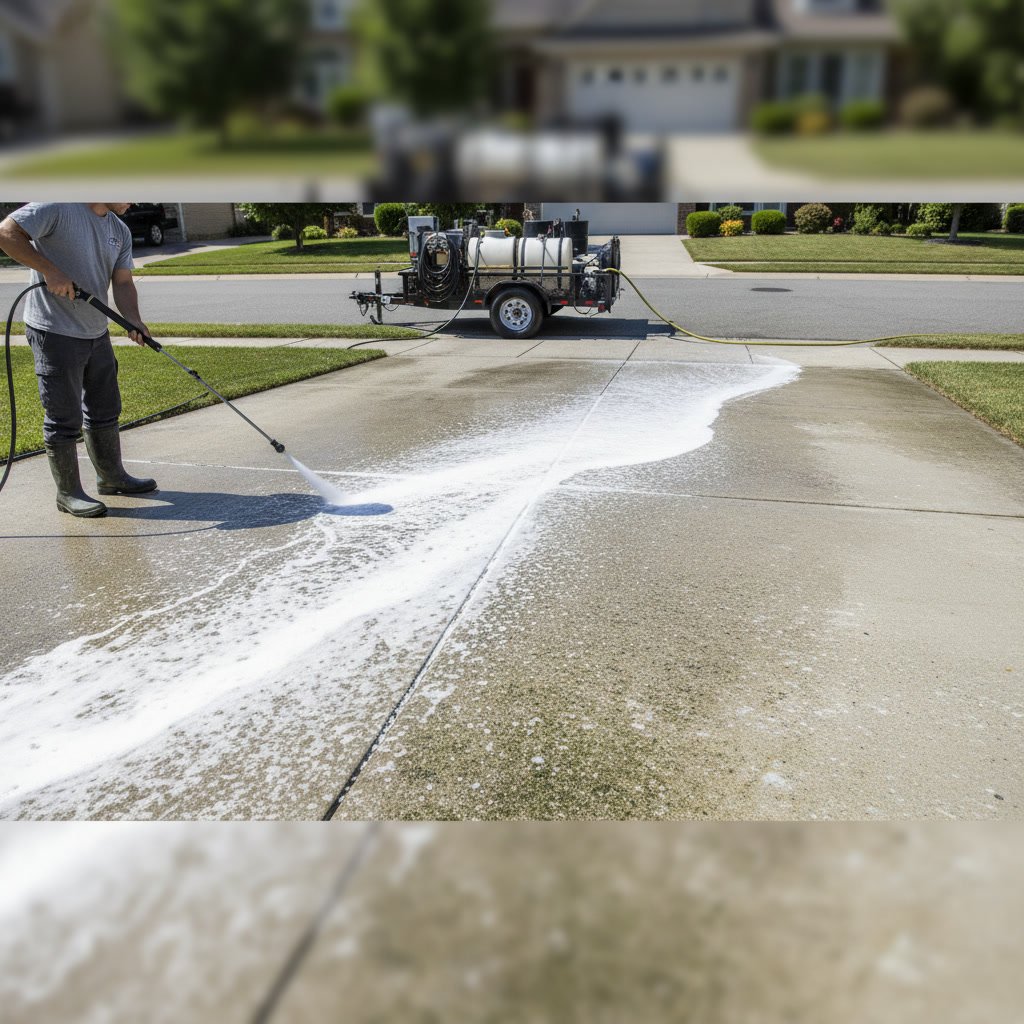
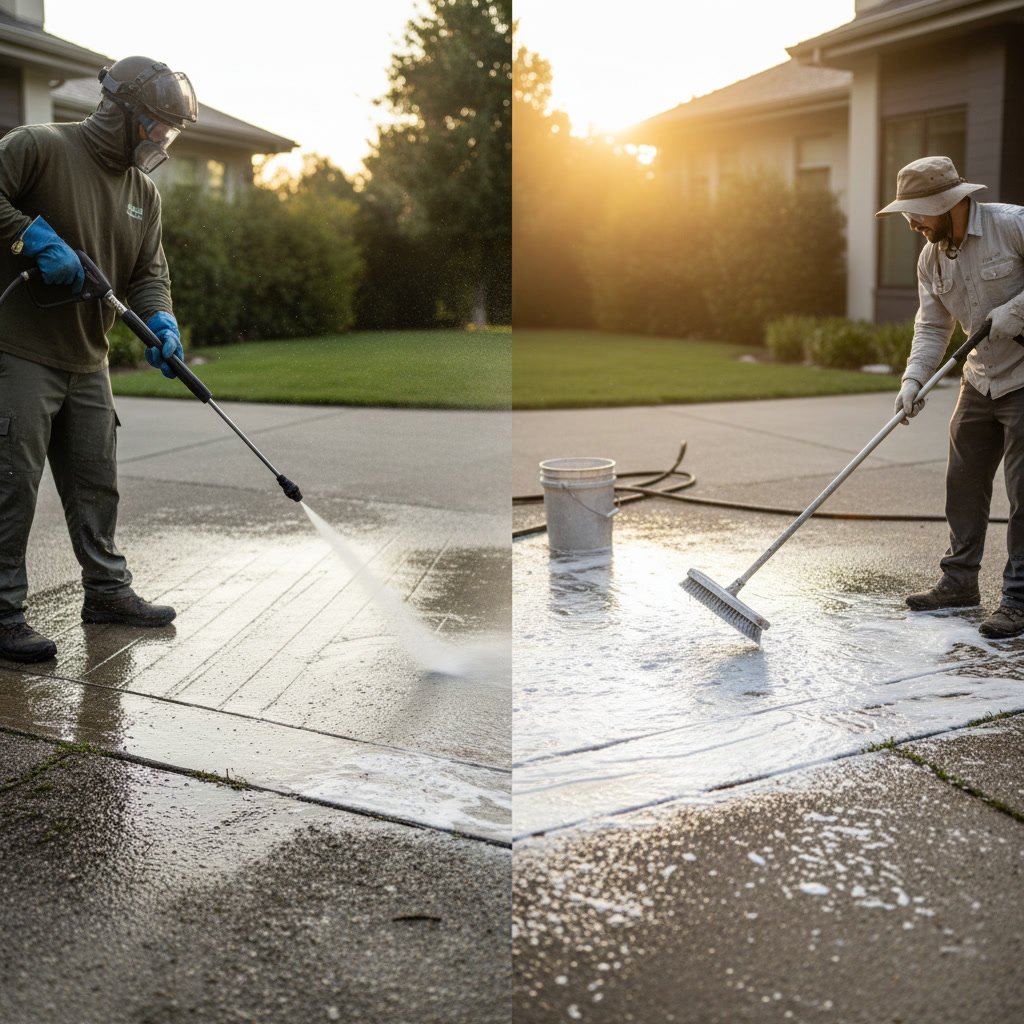
Softwashing uses low-pressure application and specialized cleaning solutions to remove dirt and organic growth, while pressure washing relies on high-pressure water jets. For most concrete driveways, softwashing is safer because it prevents surface etching, joint damage, and premature wear that high-pressure methods can cause. The choice between pressure washing vs softwashing depends on your driveway’s age, condition, and the type of staining present.
Your driveway represents one of the largest surface areas of your property and endures constant exposure to vehicle traffic, oil drips, tire marks, and weather extremes. Over time, these factors create stubborn stains and embedded dirt that regular hosing cannot remove. Understanding how different cleaning methods interact with concrete helps you maintain your driveway’s structural integrity for decades.
Why Your Driveway Cleaning Method Matters More Than You Think
Concrete appears solid and indestructible, but it is actually a porous material with a complex internal structure. The surface layer, called the cream or finish coat, measures only about one-eighth to one-quarter inch thick on most residential driveways. Beneath this thin protective layer lies the aggregate matrix that provides structural strength.
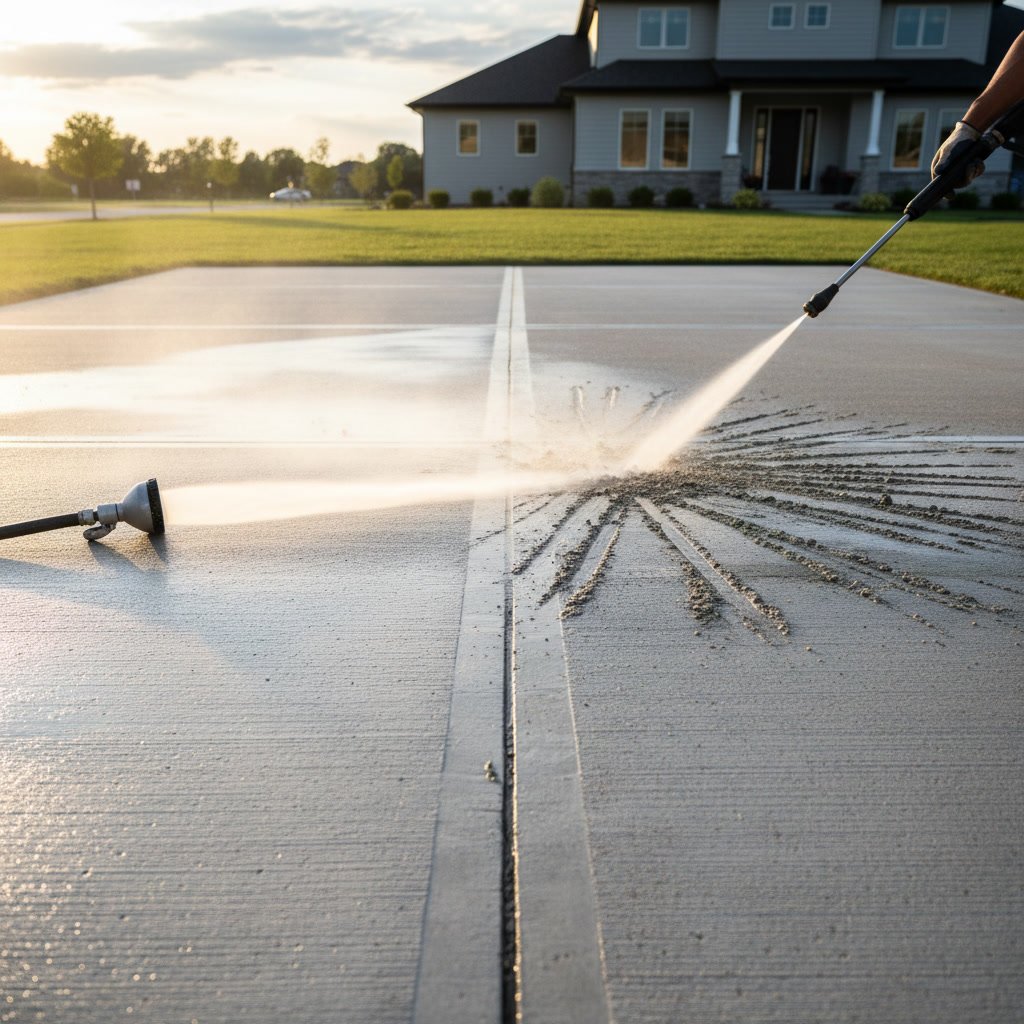
When you apply excessive pressure to this surface, you risk removing the cream coat entirely, exposing the rougher aggregate underneath. This exposed surface absorbs water more readily, becomes more susceptible to freeze-thaw damage in winter months, and creates a texture that traps dirt faster than before. Once you damage this protective layer, you cannot restore it without professional resurfacing.
How High-Pressure Water Affects Concrete Surfaces
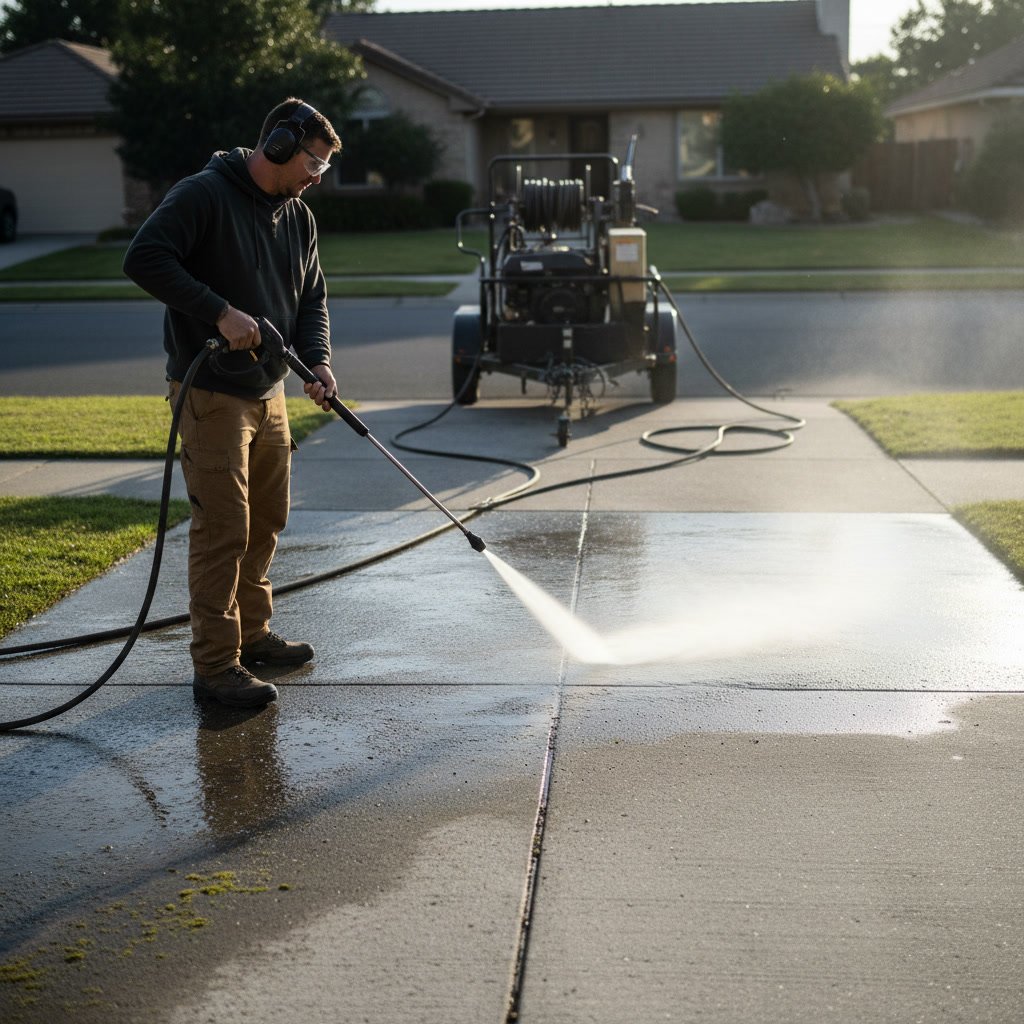
Standard pressure washers deliver water at 2,000 to 4,000 pounds per square inch (PSI). When concentrated through a narrow nozzle tip and held close to concrete, this force can cut through the surface cream coat in seconds. The damage often appears as visible lines, swirl marks, or a rough, stripped appearance that dulls the concrete’s finish.
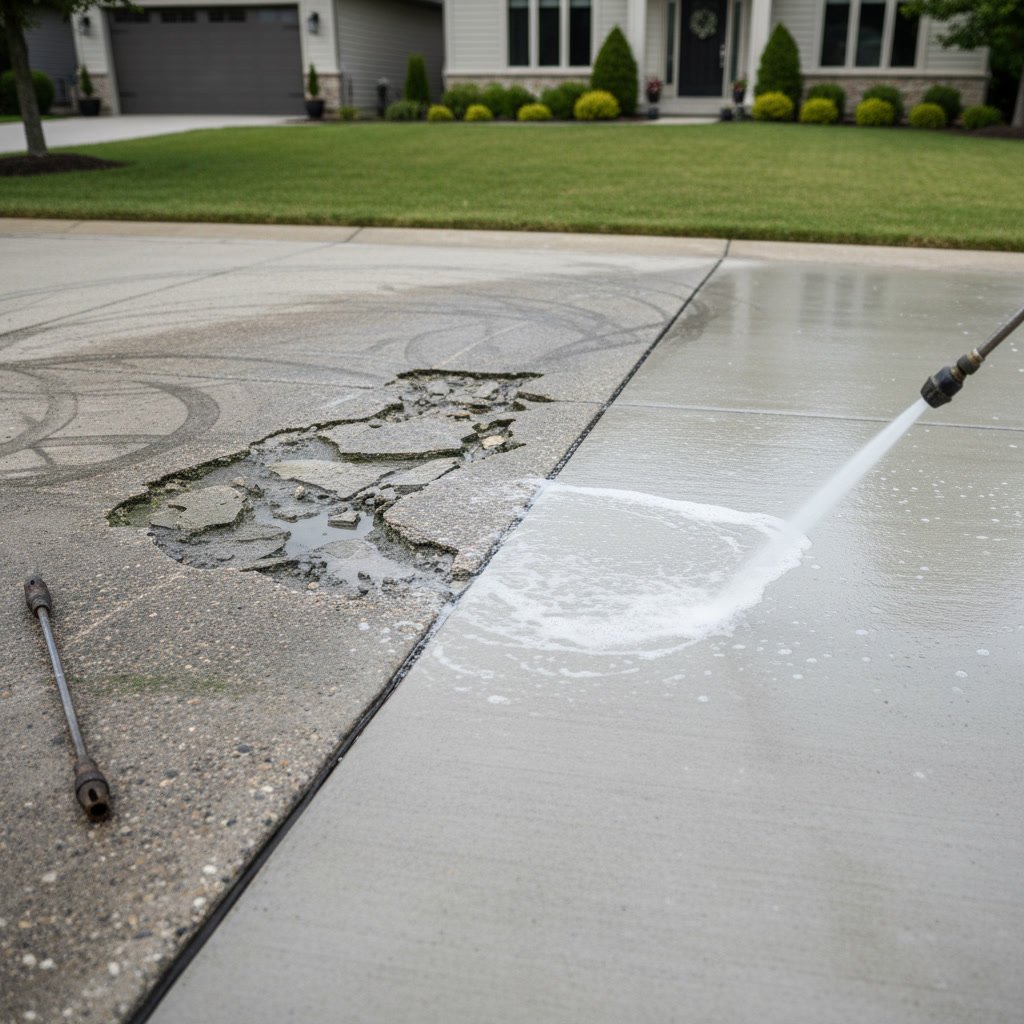
Joint damage represents another common problem with high-pressure cleaning. The seams between concrete slabs and expansion joints filled with flexible sealant cannot withstand concentrated water pressure. The force blows out joint sand, damages sealant, and creates gaps where water infiltrates. This water penetration leads to settling, cracking, and costly repairs that far exceed the cost of proper cleaning.
Even experienced operators struggle to maintain consistent distance and pressure across large surface areas. A moment of inattention or a slip of the wand creates permanent surface scarring. You cannot undo pressure damage once it occurs.
The Science Behind Softwashing for Orlando Driveways
Softwashing applies cleaning solutions at 60 to 100 PSI, roughly equivalent to a garden hose with a spray nozzle. The cleaning power comes from biodegradable surfactants and sodium hypochlorite solutions that break down organic stains, mold, mildew, and algae at the molecular level. In Orlando’s humid climate, these organic growths thrive on concrete surfaces and create the black, green, and brown discoloration homeowners battle constantly.
The solutions penetrate the concrete’s porous structure, killing organic growth at the root level rather than simply blasting it off the surface. This approach prevents regrowth for six to twelve months, compared to pressure washing which often sees staining return within weeks. The low pressure protects joint integrity, preserves the surface finish, and eliminates the risk of etching or gouging.
When Pressure Washing Makes Sense for Concrete
Certain situations benefit from higher pressure application, particularly when dealing with non-organic stains. Oil stains, rust deposits, and heavy tire marks sometimes require mechanical force combined with chemical treatment to remove completely. However, even in these cases, starting with the lowest effective pressure protects your concrete.
A technique called surface cleaning uses a rotating bar with multiple nozzles enclosed in a hood. This tool distributes pressure evenly and maintains consistent distance from the surface, reducing the risk of damage while improving cleaning efficiency. The enclosed design also prevents the splatter pattern that creates stripes and uneven results with wand-style pressure washing.
Breaking Down the Key Differences: Pressure vs Chemistry
Pressure washing relies primarily on mechanical force. The water’s kinetic energy physically dislodges dirt, stains, and organic matter from the surface. This approach works quickly on loose debris but struggles with embedded stains and risks surface damage when operators increase pressure to improve results.
Softwashing depends on chemical action and dwell time. The cleaning solution bonds with contaminants, breaks down their structure, and allows gentle rinsing to remove them completely. This method requires more patience as solutions need five to fifteen minutes of contact time to work effectively, but it delivers superior results without physical stress on the concrete.
Water consumption differs dramatically between methods. Pressure washing uses 3 to 5 gallons per minute at high flow rates, while softwashing typically requires less than 1 gallon per minute for application. The reduced water volume matters in areas with drainage concerns or water restrictions.
Protecting Sealed and Treated Concrete
If your driveway has been sealed with an acrylic, epoxy, or penetrating sealer, high-pressure washing can strip the protective coating in minutes. These sealers cost hundreds to thousands of dollars to apply and extend concrete life by blocking moisture penetration and chemical absorption. Removing them prematurely means reapplication expense and lost protection during the gap period.
Softwashing preserves sealers when formulated correctly. Professional-grade solutions avoid harsh acids and alkalis that degrade sealer bonds. The gentle application pressure ensures the coating remains intact while removing surface contaminants. This approach maintains your investment in both the concrete and its protective treatments.
Decorative concrete, stamped patterns, and colored surfaces face even greater risk from pressure damage. The surface treatments that create these effects sit on top of or are lightly integrated into the concrete surface. Aggressive cleaning strips color, dulls finishes, and erases textural details that define the decorative appearance.
The Real Cost of Choosing the Wrong Method
Surface damage from excessive pressure cannot be buffed out or touched up. Your options include living with the scarred appearance, applying a coating to hide the damage, or complete resurfacing. Resurfacing a standard two-car driveway runs between $2,000 and $5,000 depending on size and existing condition. That expense dwarfs the cost difference between cleaning methods.
Joint repairs add to the financial burden. Blown-out joints require cleaning, re-sanding, or caulking to restore proper function. Water that penetrates through damaged joints undermines the base material, creating voids that lead to settling and cracking. Repairing a single settled slab section costs $500 to $1,500 when you factor in mudjacking or replacement.
The hidden cost shows up in accelerated aging. Concrete damaged by improper cleaning deteriorates faster, requiring full replacement years or decades earlier than properly maintained surfaces. A well-maintained concrete driveway lasts 30 to 50 years, while damaged concrete may need replacement in 15 to 20 years.
Special Considerations for Central Florida Climate
Florida’s combination of heat, humidity, and afternoon thunderstorms creates ideal conditions for organic growth on concrete. Algae, mold, and mildew appear within months of cleaning and create slippery, discolored surfaces. These organisms grow in the concrete’s pores, not just on the surface, which explains why pressure washing alone provides only temporary results.
The state’s limestone-based soils contribute calcium deposits and white mineral staining that pressure washing cannot remove. These deposits require acidic cleaners to dissolve, but acids must be carefully formulated and applied to avoid etching the concrete surface. Professional softwashing solutions balance effectiveness with surface safety.
Hurricane season brings debris, standing water, and extended moisture exposure that accelerate organic growth. A cleaning method that kills growth at the root level and provides residual protection helps driveways stay cleaner longer between maintenance services.
What Professional Softwashing Delivers
Professional exterior cleaning companies bring calibrated equipment, tested cleaning formulas, and the experience to match methods to surface conditions. They assess your driveway’s age, existing damage, sealer status, and staining type before selecting the appropriate approach.
Pre-treatment of oil stains, rust deposits, and heavy buildup happens before the main cleaning application. This layered approach tackles different stain types with targeted solutions rather than relying on a single method for all contaminants. The result is comprehensive cleaning that addresses every issue without compromising surface integrity.
Professional application ensures even coverage, proper dwell times, and thorough rinsing that leaves no chemical residue. The equipment maintains consistent low pressure across the entire surface, eliminating the operator error that creates uneven results in DIY projects.
Extending Your Driveway’s Life After Cleaning
Once your driveway is properly cleaned, simple maintenance practices extend the time between professional services. Rinsing away spills promptly prevents staining, particularly with oil, transmission fluid, and other automotive chemicals. A quick spray-down after these incidents takes seconds but prevents permanent discoloration.
Trimming back vegetation that overhangs the driveway reduces shade and moisture that promote organic growth. Better air circulation and sunlight exposure keep surfaces drier and less hospitable to mold and mildew. This environmental management complements cleaning efforts and extends results.
Applying a quality concrete sealer after cleaning creates a protective barrier against moisture, chemicals, and staining. Sealers should be reapplied every two to three years depending on traffic and exposure. The investment in sealing pays dividends through easier cleaning, better appearance, and extended concrete life.
Keeping Your Concrete Investment Protected
Your driveway cleaning method directly impacts its appearance, structural integrity, and service life. Softwashing protects the surface finish, preserves joints, and delivers deeper, longer-lasting cleaning than high-pressure methods. The chemistry-based approach kills organic growth at the source and prevents rapid regrowth in Florida’s challenging climate.
Understanding these differences helps you make informed decisions about driveway maintenance and avoid costly damage from improper cleaning techniques. The right method preserves your investment and keeps your property looking its best for decades.
J’s Softwash has built its reputation on honest service and proven cleaning methods that protect your property. If you need expert driveway cleaning in Orlando or surrounding areas, reach out to our team at +14078073092 to schedule your service and experience the difference professional softwashing makes.