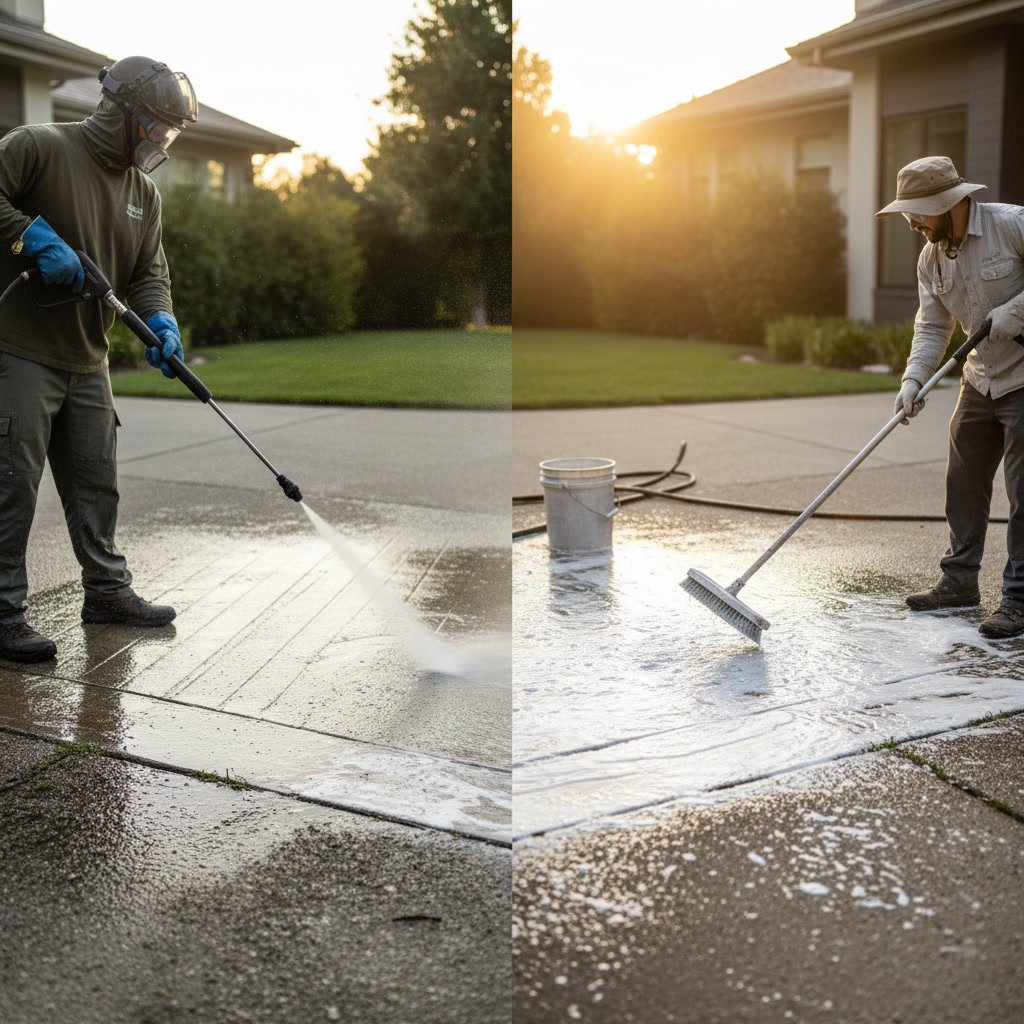
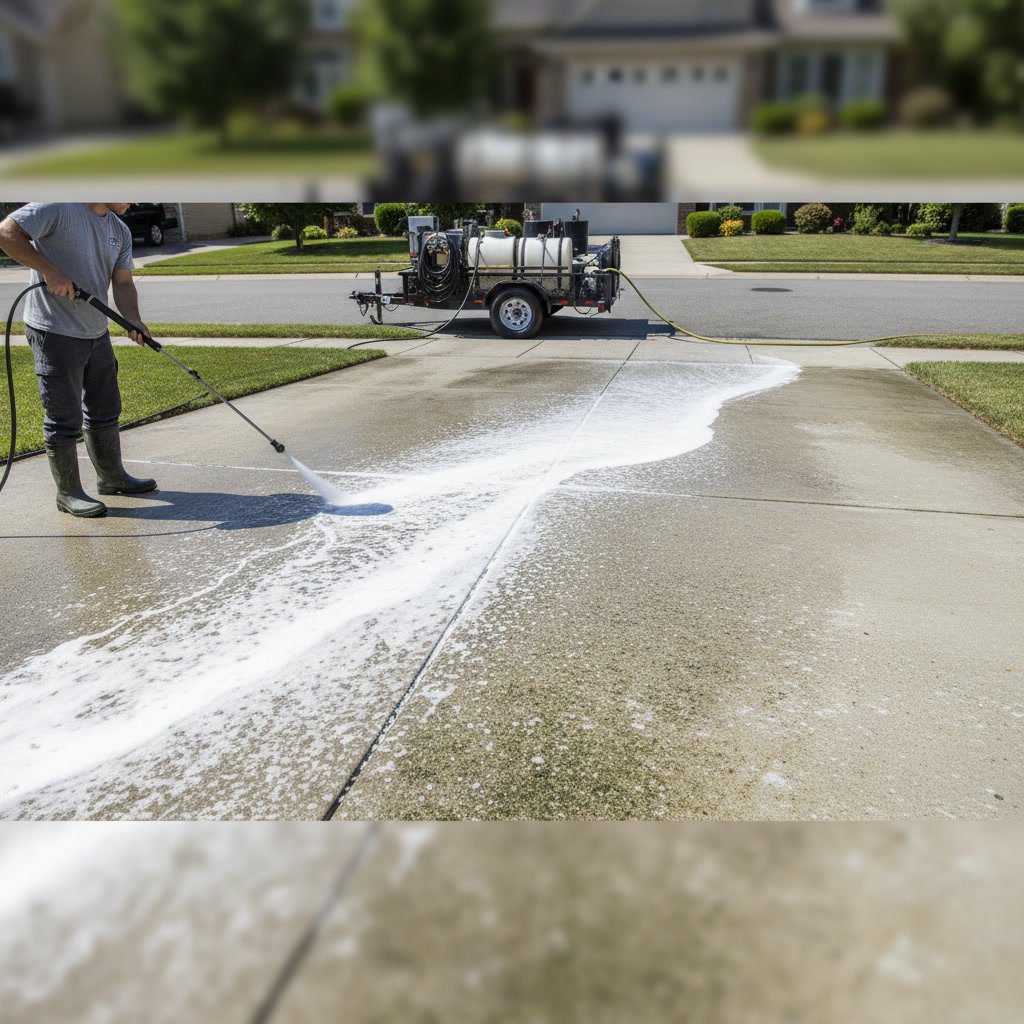
Softwash driveway cleaning uses low-pressure chemical application to remove organic growth and stains without damaging concrete surfaces. Unlike high-pressure washing that can etch and erode concrete, the softwash method protects your investment while delivering deep cleaning results that last longer. The process relies on specialized biodegradable surfactants that break down dirt, mold, mildew, and algae at the root level rather than simply blasting them away.
Your driveway represents one of the largest surface areas on your property. It endures constant exposure to vehicle traffic, oil drips, tire marks, and Florida’s unique environmental challenges. The porous nature of concrete makes it particularly vulnerable to organic growth that not only looks unsightly but actively degrades the material over time.
Why Standard Pressure Washing Can Damage Your Driveway
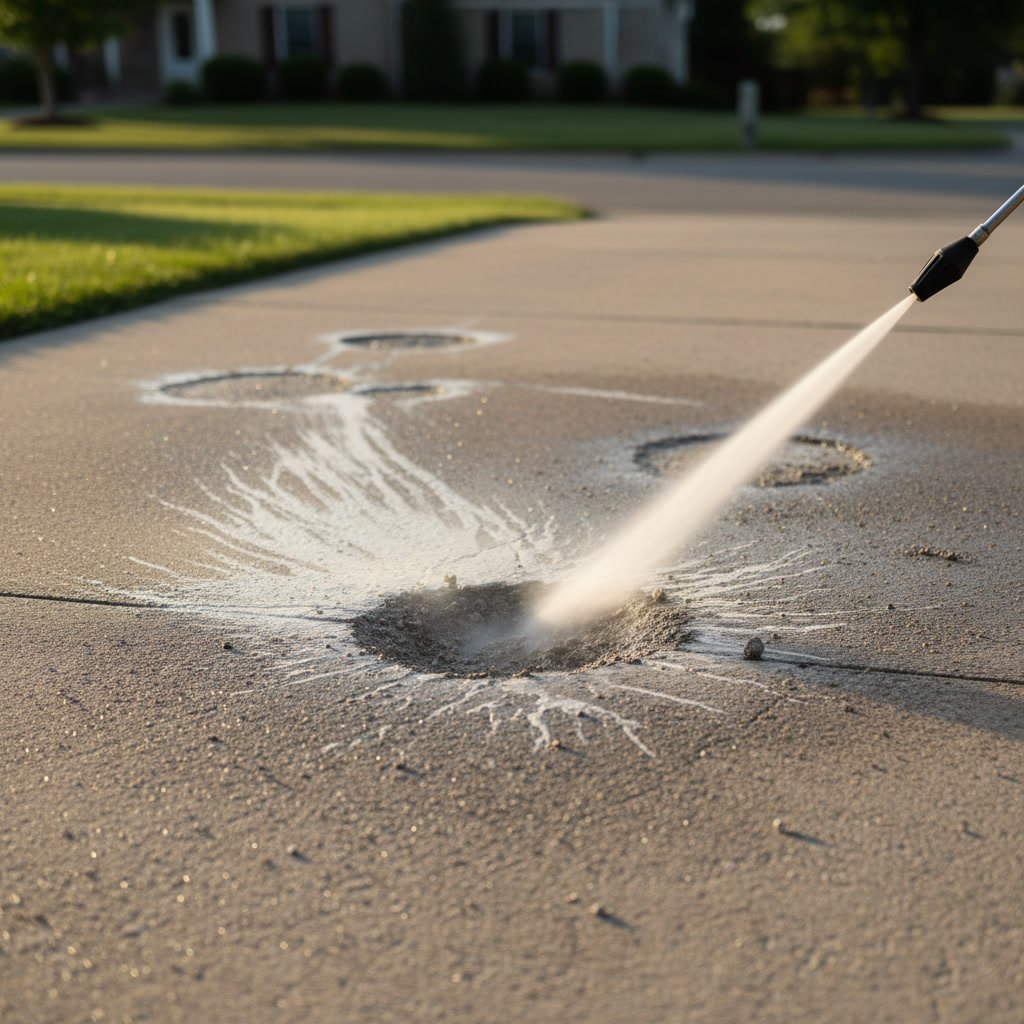
Traditional pressure washing equipment can generate anywhere from 2,500 to 4,000 PSI of force. When applied to concrete, especially aging or slightly compromised surfaces, this pressure creates multiple problems. The water stream can erode the cement paste that binds aggregate particles together, creating a rough, pitted surface that actually traps more dirt going forward.
Pressure washing also drives water deep into the concrete’s porous structure. In Florida’s climate, this moisture creates an ideal environment for mold and mildew to establish roots below the surface. You end up with a clean-looking driveway that shows renewed growth within weeks because the underlying problem was never addressed.
The Science Behind Low-Pressure Chemical Cleaning
The softwash approach flips the cleaning equation. Instead of relying on mechanical force, it uses chemistry to do the heavy lifting. Professional-grade surfactants lower water’s surface tension, allowing cleaning solutions to penetrate deep into concrete pores where organic matter hides.
These solutions typically contain sodium hypochlorite at controlled concentrations, combined with surfactants and water. The sodium hypochlorite oxidizes organic material, killing mold, mildew, algae, and bacteria at the cellular level. Surfactants help the solution cling to vertical and horizontal surfaces long enough to work, then assist in lifting away dead organic matter and stains.
Application pressure rarely exceeds 100 to 300 PSI, roughly equivalent to a standard garden hose with a nozzle attachment. This gentle pressure distributes the cleaning solution evenly without causing any surface damage or forcing excess water into the concrete matrix.
Step-by-Step Process for Professional Driveway Softwashing
The process begins with a thorough inspection of the concrete surface. Technicians identify any existing cracks, spalling, or areas of concern that require special attention or pre-treatment. Any nearby landscaping, vehicles, or sensitive surfaces receive protection before chemical application begins.
Next comes the pre-treatment rinse using plain water at low pressure. This step removes loose debris, wets the surface to control chemical absorption, and helps the cleaning solution spread more evenly. For driveways with heavy oil stains or rust, targeted degreasers or rust removers may be applied to specific areas.
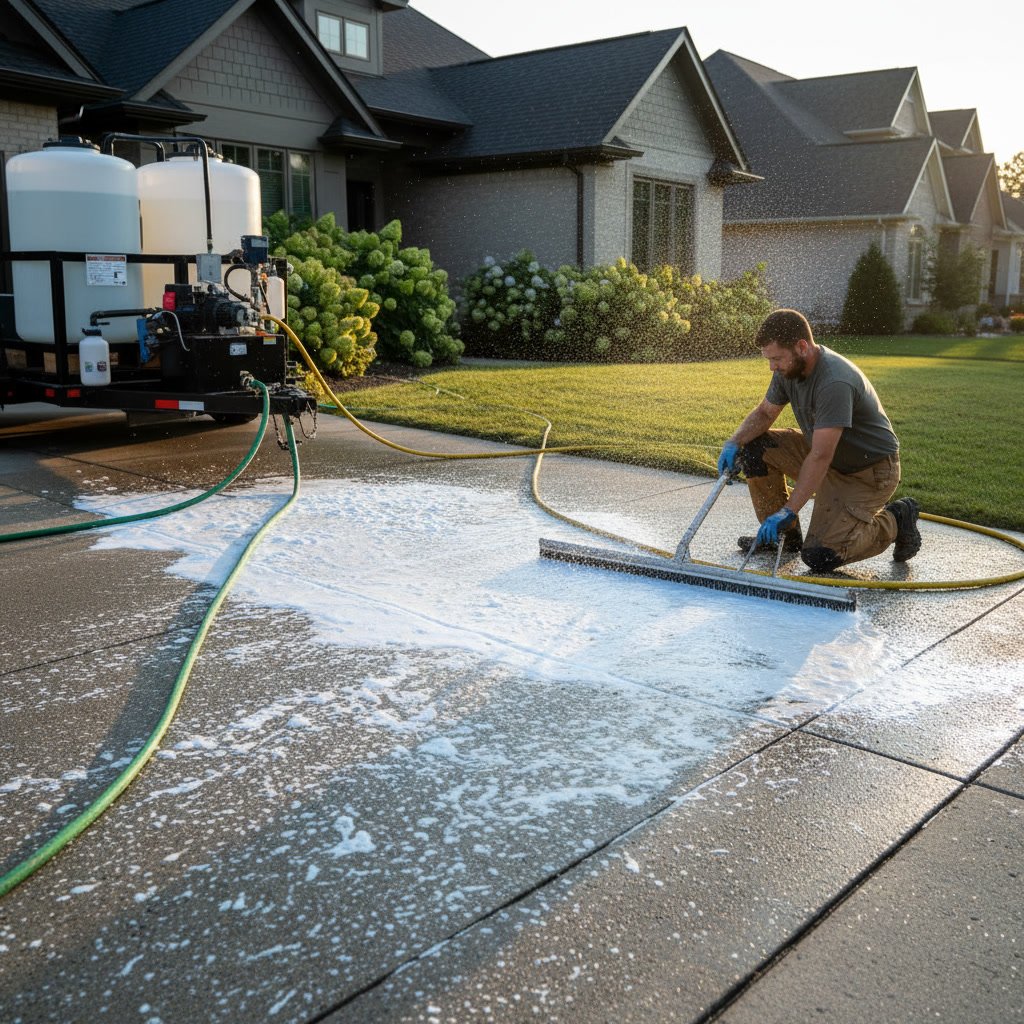
The softwash solution is then applied using specialized equipment that ensures even coverage at the correct dilution ratio. The solution dwells on the surface for a prescribed period, typically 10 to 20 minutes depending on the level of contamination and the specific products used. During this dwell time, you can actually watch organic growth begin to break down and lift away from the concrete.
Finally, the surface receives a thorough low-pressure rinse that removes all chemical residue, dead organic matter, and lifted stains. The rinse process uses more water volume than pressure, ensuring complete removal without surface damage.
How This Method Extends Concrete Lifespan in Orlando
Orlando’s subtropical climate creates perfect conditions for organic growth on concrete surfaces. High humidity, frequent rain, and warm temperatures year-round mean that algae, mold, and mildew thrive on exterior surfaces. When left untreated, these organisms produce acids as metabolic byproducts that slowly etch and degrade concrete.
By eliminating organic growth at the root level, softwashing stops this chemical degradation process. The cleaning solution penetrates deep into concrete pores, killing organisms that pressure washing would simply push deeper into the surface. This thorough elimination means treated surfaces stay cleaner significantly longer, often six months to a year compared to just weeks with pressure washing alone.
J’s Softwash has observed that regular maintenance using this method can extend the functional lifespan of concrete driveways by years, delaying expensive replacement or resurfacing projects.
Protection Against Efflorescence and Staining
Efflorescence appears as white, powdery deposits on concrete surfaces. It occurs when water moves through the concrete, dissolving salts, then evaporates at the surface leaving those salts behind. Pressure washing can actually worsen efflorescence by driving more water into the concrete.
The controlled application and lower water volume used in softwashing minimizes this risk. Additionally, the cleaning solutions help dissolve and remove existing efflorescence deposits without the repeated soaking that exacerbates the problem.
For stubborn stains like rust, oil, or tannins from leaves and organic debris, targeted treatments can be incorporated into the softwash process. These specialized agents break down specific stain molecules, allowing them to be rinsed away rather than ground deeper into the concrete’s porous structure.
Environmental Considerations and Runoff Management
Professional softwash companies use biodegradable surfactants that break down naturally and pose minimal environmental risk when properly diluted and managed. The sodium hypochlorite used neutralizes quickly when exposed to organic matter and sunlight, breaking down into salt and water.
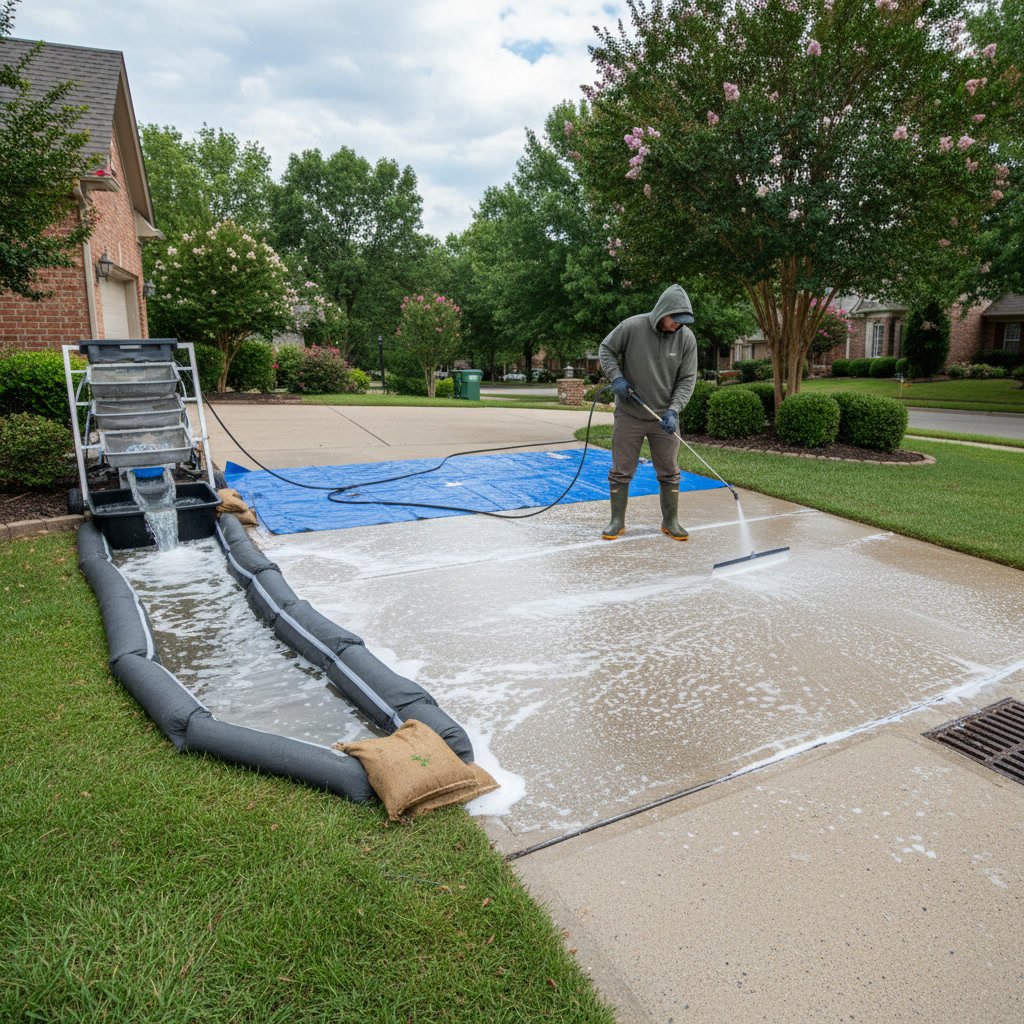
Proper technique includes controlling runoff to prevent concentrated chemicals from entering storm drains or waterways. Technicians direct rinse water toward landscaped areas when possible, where soil naturally filters and neutralizes the diluted solution. Sensitive plants may be pre-watered to dilute any overspray, and thorough post-treatment rinsing ensures no chemical residue remains.
The reduced water consumption compared to prolonged pressure washing sessions also makes softwashing a more environmentally responsible choice. A typical driveway cleaning uses 30 to 40 percent less water than aggressive pressure washing that requires multiple passes to achieve similar results.
Comparing Results Between Methods
When homeowners compare the two approaches side by side, several differences become immediately apparent. Pressure washing delivers instant visible results as grime blasts away, but closer inspection often reveals surface damage, streaking, and incomplete cleaning in textured or porous areas.
Softwashing takes slightly longer to show results as the chemicals need dwell time to work. However, the final outcome typically shows more thorough cleaning with no surface damage, more uniform appearance, and significantly longer-lasting results. Organic growth returns within four to eight weeks after pressure washing but often takes six to 12 months after professional softwash treatment.
The cost difference between methods is often negligible, especially when you factor in the extended time between cleanings that softwashing provides. You end up paying for service less frequently while maintaining a consistently clean appearance.
Ideal Frequency for Maintenance Cleaning
Most Central Florida driveways benefit from professional softwash cleaning once or twice per year. Properties with heavy tree coverage, poor drainage, or north-facing driveways that receive less direct sunlight may need more frequent attention as these conditions accelerate organic growth.
Regular maintenance prevents the buildup of deeply embedded stains and organic matter that become progressively harder to remove. A driveway cleaned annually requires less aggressive treatment and lower chemical concentrations than one neglected for several years, making the process even gentler on the concrete.
Homeowners who incorporate house washing and patio cleaning into the same service visit create a comprehensive maintenance program that protects their entire property investment while maximizing service value.
What Property Owners Should Expect During Service
Professional technicians arrive with specialized equipment including low-pressure pumps, chemical injection systems, and various nozzles designed for even application. The entire process for an average two-car driveway typically takes 45 minutes to 90 minutes depending on the level of soiling and any additional spot treatments required.
You should expect technicians to protect surrounding areas, apply cleaning solutions, allow proper dwell time, and thoroughly rinse all surfaces. Reputable companies will explain their process, identify any concerns about your concrete’s condition, and provide realistic expectations about results and longevity.
After treatment, your driveway should look noticeably cleaner with uniform color and no streaking. Some very deep stains, particularly old rust or oil that has penetrated deeply over years, may show improvement rather than complete removal. Honest technicians will set these expectations upfront rather than promising impossible results.
Protecting Your Investment for Years to Come
Your driveway likely represents thousands of dollars in property value and functionality. Protecting that investment requires more than occasional cleaning. It demands a method that actually preserves the concrete structure rather than gradually degrading it with each service visit.
The softwash method accomplishes this by addressing contamination at its source, using chemistry instead of destructive force, and creating longer-lasting results that reduce the frequency of cleaning required. Combined with proper drainage, prompt attention to spills, and occasional sealing where appropriate, this approach can keep your concrete looking great while extending its functional lifespan well beyond what traditional maintenance would achieve.
J’s Softwash brings this protection-focused approach to every project, treating each property with the same care and attention to detail that built the company from a single person with a Jetta into a trusted name across Central Florida.
If your driveway shows signs of organic growth, staining, or general discoloration, professional softwash treatment can restore its appearance while protecting the concrete from further degradation. Reach out to schedule an evaluation and discover how the right cleaning method makes all the difference. Contact +14078073092 to discuss your property’s specific needs and get your driveway looking its best again.